Biohub’s $1.8 Billion AI Biology Push Is a Data Bet, Not a New Model
Biohub’s $1.8 billion plan funds data, not a new virtual cell. A dataset is expected in about a year, with some company-backed data initially private.
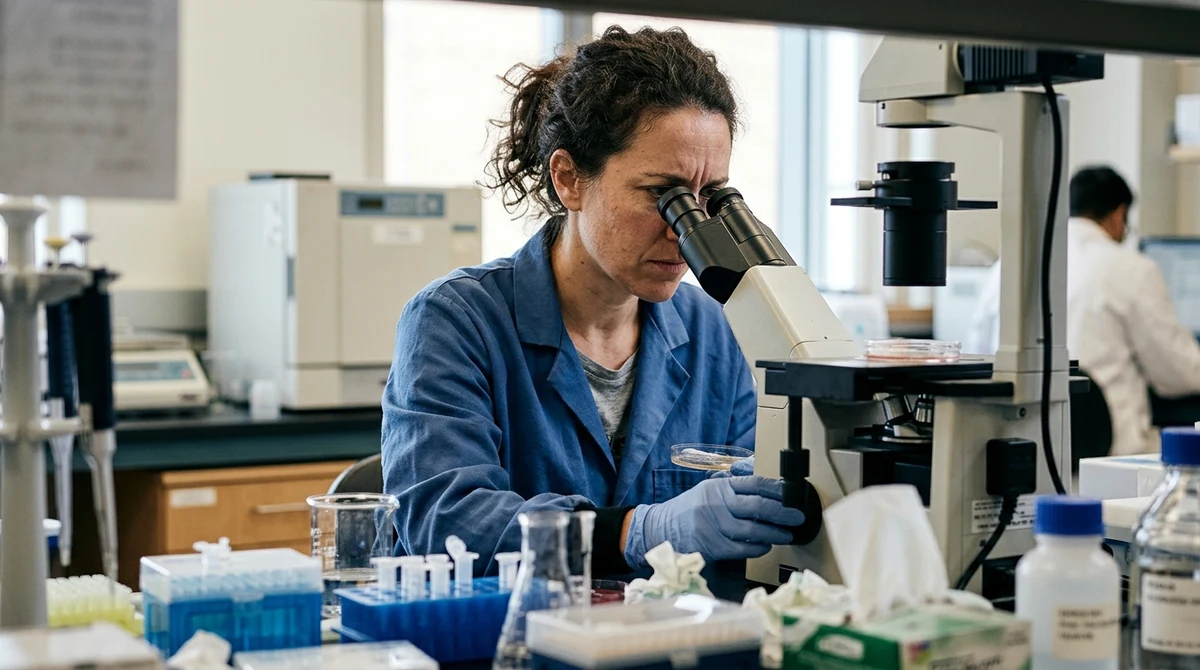
Biohub, U.S. federal agencies and technology companies announced a $1.8 billion effort on October 7 to build and standardize biological data for future AI models. The goal is to help researchers predict how cells respond to different conditions and decide which ideas to test in the lab.
The announcement funds the groundwork for future models. It does not release a new system that can predict cell behavior.
What the $1.8 billion includes
The total combines money with data, computing and measurement tools. It is not all new cash. The National Institutes of Health will coordinate relevant datasets developed through more than $500 million in earlier federal investment.
- Google DeepMind, Isomorphic Labs and Meta will invest $300 million together.
- The Department of Energy plans to contribute more than $500 million over five years for measurement, modeling and computing.
- Biohub’s earlier $500 million commitment anchors the initiative, including spending on tools to measure and study biology.
Biohub says it will work with the National Institutes of Health to standardize existing datasets so researchers can use them more consistently to train AI systems. The partners also plan to collect new measurements of how cells respond to different conditions.
Researchers will have to wait for the models
The announcement is about building a data foundation, not releasing a virtual-cell model. Biohub aims to support future systems that let researchers explore biological questions on a computer and choose which experiments merit testing in a lab.
Reuters reported that Biohub expects the first dataset in about a year and aims to make progress toward predictive models within five years. Those are project targets, not evidence that a model will accurately predict cell behavior or speed up drug development.
Open data, but not equal access from day one
The initiative is presented as an open scientific resource, but access may vary at the start. Reuters reported that commercial funders may get a temporary head start on datasets they help develop before those resources become public. Biohub’s head of science told Reuters that government-funded work will not carry the same restriction.
For researchers outside the participating companies, the timing matters. The initiative’s value will depend on how well datasets can be compared, when they become public and whether models trained on them make useful predictions in real experiments.