CERN and Mistral Plan AI for Billions of Simulated Collisions
Their proposed physics model could support several analysis tasks, but its budget, schedule and eventual performance remain unknown.
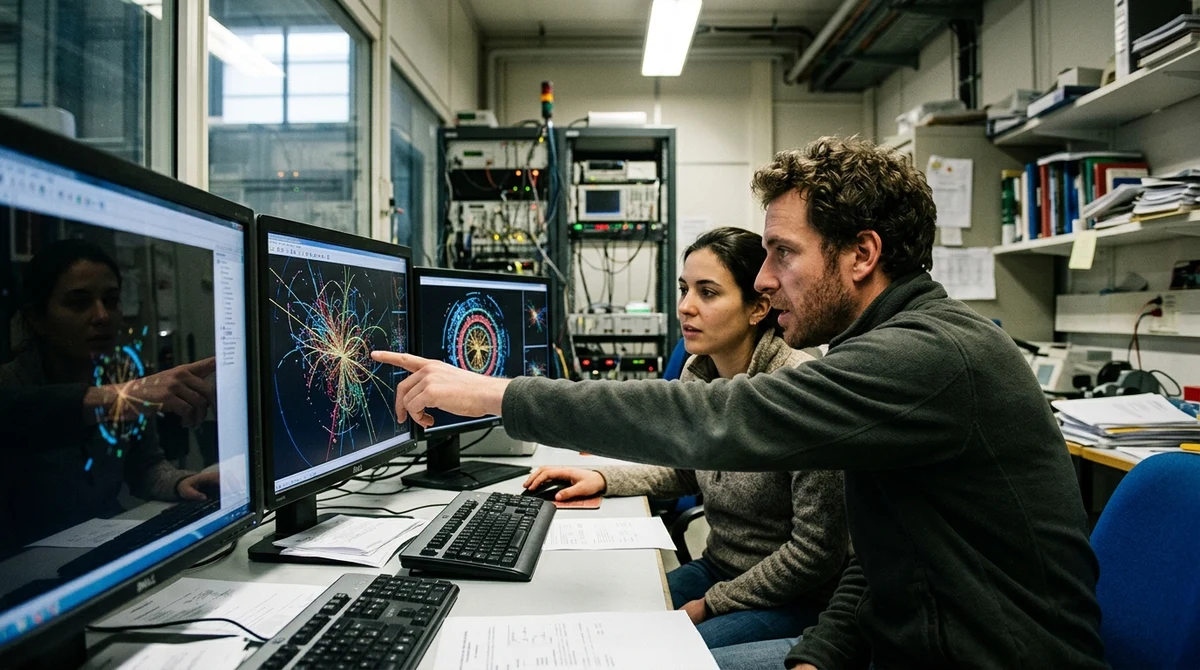
CERN and French AI company Mistral signed a statement of intent on October 15, 2026, to develop a foundation model for collider physics. The proposed “Large Physics Model” would train on billions of simulated proton-proton collisions. No budget or delivery date has been announced.
The plan is a research project, not a released model or a proven tool for discovering particles.
CERN says the model could help reconstruct collisions, identify particles, flag unexpected signals and assess future detector designs. Those uses remain proposals. The model’s reliability has yet to be tested.
Why use simulated collisions?
Physicists currently use specialist algorithms to turn detector signals into particles and other objects for analysis. CERN says a foundation model could learn across that process and support several tasks in one system.
The proposed training data is not the same as CERN’s experimental archive. The organization says it has stored roughly one exabyte of data from the Large Hadron Collider. The announcement does not say the model will train on that entire archive.
- Billions of simulated proton-proton collisions are proposed for training.
- Roughly one exabyte of experimental data is stored from the Large Hadron Collider.
- The High-Luminosity Large Hadron Collider is expected to begin operating around 2030 and produce ten times more collisions.
More collisions, no delivery date
The planned increase in collision volume helps explain the interest in tools that could assist at several stages of analysis. But it does not establish when the proposed model will be ready.
For now, the concrete step is the agreement to work together. Reuters reported that the partners disclosed no project budget or schedule, leaving both development and eventual performance open questions.